It would make intuitive sense that exercise is good for long term health. The principle behind the effectiveness of exercise is the concept of physiological reserve. When you get sick, for example, your body conserves energy, and maintains blood flow to your vital organs in order to make sure you survive. The peripheral circulation will constrict, and your systemic circulation will dilate so that your lungs, heart, and brain are well perfused with blood. If we work to exercise these vital organs through aerobic exercise, their “physiological reserve” increases and when you get sick they have to work less to maintain the same level of circulation in your body. The same principle goes for strength training. First of all, our muscles use energy either in the form of carbohydrates, fats, and proteins. They are a sink for glucose that sucks up all the glucose in your bloodstream to replenish the glycogen in your muscles that will be used for exercise, helping increase your insulin sensitivity and reduce the risk of diabetes. Secondly, when muscles undergo mechanical stress, there are micro-tears in the muscle fibers, that when healed causes the muscles to hypertrophy and grow larger. Their capacity to do work increases. This is helpful in later years of life to reduce gravitational and mechanical stress on your joints and bones, preventing osteoporosis and arthritis. There are many more benefits to aerobic and strength training that I will not be talking about in this article. The main purpose of this article is to share with you an evidence based strategy for your family at every age group, which to prioritize for higher quality of life.
I am referencing the World Health Organization chapter from the book they released on Global Recommendations on Physical Activity for health. The recommendations are for three groups, one from 5-17 years, another from 18-64 years, and 65 years and older. I will provide my own thoughts and commentary on this summary.
5-17 years
Prioritize physical activities that support natural development that are enjoyable and safe. All children should be physically active daily as part of play, games, sports, transportation, recreation, physical education, or planned exercise, in the context of family, school, and community activities. For children who are inactive, a progressive increase in activity to reach certain targets are helpful in preventing obesity and preventing the development of metabolic and pathologic conditions that will be problematic in the future.
The health benefits are documented as increased physical fitness (both cardiovascular and muscular), reduced body fatness, favorable cardiovascular and metabolic disease risk profiles, enhanced bone health and reduced symptoms of depression. A dose response relationship appears to exist, in that greater doses of physical activity lead to improved markers of health.
Contrary to popular myth, participation in muscle strengthening activities 2-3 times per week significantly improves muscular strength and does not impair vertical growth. However, my personal advice is unless your kid is performing in sports like football and track that require intense physical output, I would try to minimize the powerlifting at this age. My personal belief is that the compression you place on the epiphyseal growth plates can impair some of the vertical growth that would result in optimal height. Trying to do body weight exercises at this age group and getting adequate sleep, rest, and nutrition will lead to optimal physical development. My brother slept as much as he physically could, ate like a horse, and stayed physically active throughout his teenage years. He ended up 2 inches taller than I am. I studied more and woke up at early hours to get work done. I should have slept more. When teenagers sleep, their body releases growth hormone that the bones respond to to grow taller, all of this happens during sleep. Don’t force your kids to wake up early just because you do.
The recommendations are as follows:
- Children and youth age 5-17 should accumulate at least 60 minutes of moderate to vigorous intensity physical activity daily.
- Amounts of physical activity greater than 60 minutes provide additional health benefits.
- Most of the daily physical activity should be aerobic. Vigorous intensity activities should be incorporated, including those that strengthen muscle and bone, at least 3 times per week.
18-64 years
Okay, I understand this is a very wide age group and experiences may vary for people in this age bracket. However as World Health Organization had to make a general recommendation, they tried to come up with a solution that works for everyone. Generally, people are healthier in late teenage years to late 20’s and early 30’s, and then due to aging and life circumstances, tend to get worse in later years. If people take care of themselves and can afford good healthcare, and take preventative measures such as the exercise that I am about to share with you, then you can slow down the rate of aging, and even continue to be physically healthy until old age.
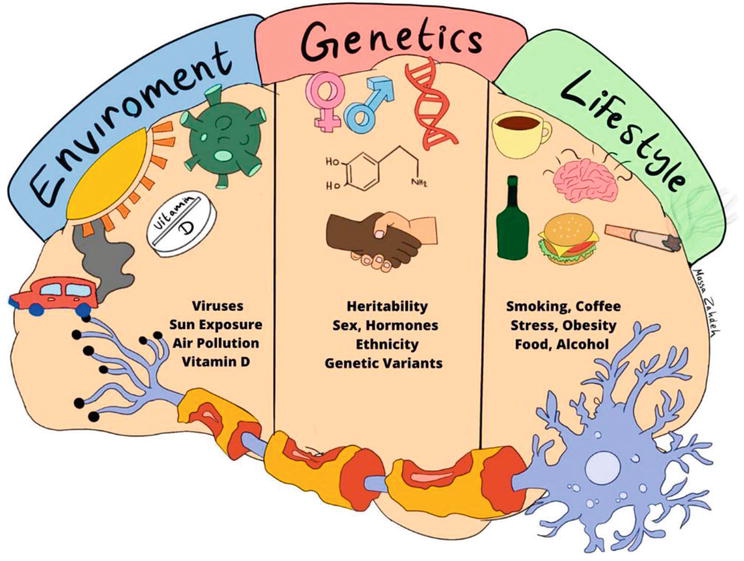
Every individual has a personal equation of environment, genetics, and lifestyle that impacts their trajectory of health throughout their life. Fortunately, there are things we can do for preventative health, and try to live in an environment that fosters positive effects on our life. Unfortunately, there are also factors we cannot control, like what family we are born into, or what foods are available, or what environmental risks are impacting us.
Back to the scheduled programming, general recommendations for this age group:
These guidelines apply to all healthy adults as well as individuals with chronic conditions such as hypertension and diabetes. Pregnant women or persons with cardiac events may need to take extra precautions and consult an exercise physiologist. These recommendations are applicable irrespective of gender, race, ethnicity, and income level. To be most effective requires personal consultation for their personal physical activity. Remember exercise improves health on a dose dependent relationship, the more the better your health outcomes.
- Adults aged 18-64 should do at least 150 minutes of moderate-intensity physical activity throughout the week or do at least 75 minutes of vigorous intensity aerobic physical activity throughout the week or an equivalent combination of moderate and vigorous intensity activity.
- Aerobic activity should be performed in bouts of at least 10 minutes duration.
- For additional health benefits, adults should increase their moderate intensity aerobic physical activity to 300 minute s per week, or engage in 150 minutes of vigorous intensity physical activity per week, or an equivalent combination of moderate and vigorous intensity activity
- Muscle strengthening activities should be done involving major muscle groups on 2 or more days a week.
Here is the evidence that exercise improves health for this age group:
- there is a dose response pattern related to depression
- there is a direct relationship between physical activity and cardiorespiratory health (risk reduction of coronary heart disease, coronary vascular disease, stroke, hypertension). Fitness has direct dose response relations between intensity, frequency, duration, and volume. Risk reductions occur at levels of 150 minutes of at least moderate intensity activity per week.
- there is a direct relationship between physical activity and metabolic health, including reduction of diabetes and metabolic syndrome. 150 minutes of moderate to vigorous physical activity bring significantly lower risks.
- Helps weight maintenenance.
- Less risk of hip or vertebral fracture, can minimize decrease in spine and hip bone mineral density. can increase skeletal muscle mass, strength, power, and intrinsic neuromuscular activation.
- increase peak bone mass density.
- linked to prevention of breast and colon cancer.
- lower rates of all cause mortality.
65 years and above
So same thing here, personal recommendations are essential. But the WHO has general recommendations for this age group. Essentially, the principle is, the more the better, and if you can’t do something without injuring yourself, don’t do it. It is a common misnomer for people to think that trying to get old is terrible, as all the diseases and sickness comes in old age. While the second half of that sentence is true, it is also true that if you practice unhealthy behaviors, you will experience all those same problems much earlier. Essentially, the longer you practice good health, the longer your healthy lifespan is as well. You experience more years of good health and high quality of life if you take care of yourself. It is another argument to talk about the manner of death itself. Yes, death can be slow and painful, or it can be fast and quick. But healthy people are less likely to die from chronic disease over a longer time period and experience compressed morbidity, where their eventual decline is more rapid and less painful.
The same benefits from the previous age group are experienced in this age bracket, so I won’t state them again. These are the recommendations:
- Adults aged 65 years and above should do at least 150 minutes of moderate intensity aerobic physical activity throughout the week or do at least 75 minutes of vigorous intensity aerobic physical activity throughout the week or an equivalent combination of moderate and vigorous intensity activity.
- Aerobic activity should be performed in bouts of at least 10 minutes duration.
- For additional health benefits, adults aged 65 years and above should increase their moderate intensity aerobic physical activity to 300 minutes per week, or engage in 150 minutes of vigorous intensity aerobic physical activity per week, or an equivalent combination of moderate and vigorous intensity activity
- Adults of this age group, with poor mobility, should perform physical activity to enhance balance and prevent falls on 3 or more days per week.
- Muscle strengthening activities should be done involving major muscle groups, on 2 or more days a week.
- When adults of this age group cannot do the recommended amounts of physical activity due to health condittions, they should be as physically active as their abilities and conditions allow.
Summary
Of course, no one can tell you how to live your life. It is your choice whether you choose to follow these recommendations. However, these are the evidence based recommendations if you choose to practice exercise in a manner that maximizes your physiological reserve and body’s capacity to fight illness. Personally, I have friends and family and people I have to take care of. My motivations for practicing good health are so that I can pursue my dreams of being the best doctor I can possibly be, and staying around long enough to see what the world has to offer in terms of scientific advancement, technological development. I have places to visit in mind, nature to enjoy, and adventures to be had. I’m sure your motivations may differ, but I wish you good health and prosperity for yourself, your friends, and family.
Resources:
Global Recommendations on Physical Activity for Health. Geneva: World Health Organization
; 2010. 4, RECOMMENDED POPULATION LEVELS OF PHYSICAL ACTIVITY FOR HEALTH. Available from: https://www.ncbi.nlm.nih.gov/books/NBK305058/
Fries JF. The compression of morbidity
. 1983. Milbank Q. 2005;83(4):801-23. doi: 10.1111/j.1468-0009.2005.00401.x. PMID: 16279968; PMCID: PMC2690269.
 Intro
Intro 